
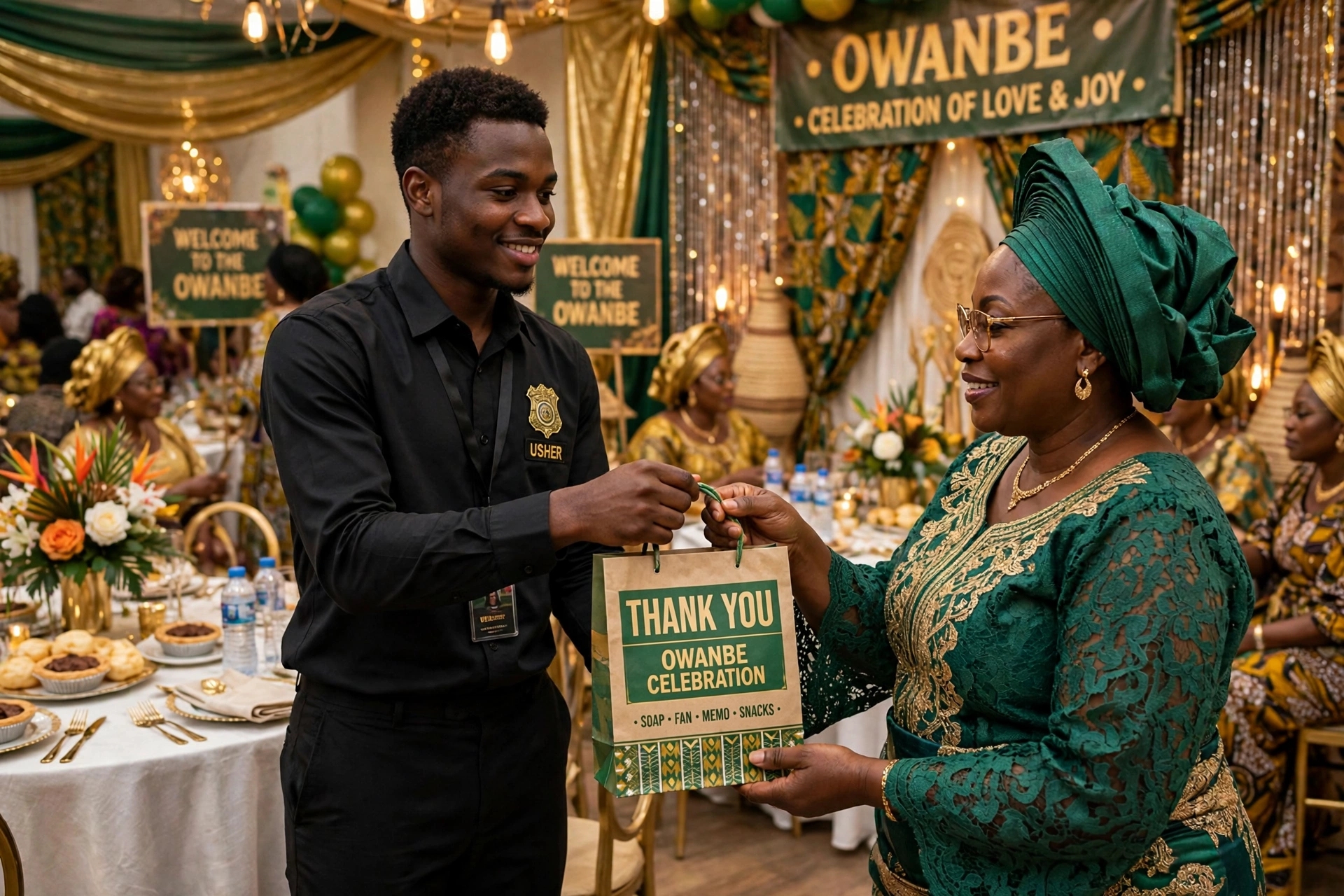
WHY SOUVENIRS AT EVENTS: SHOULD EVERY GUEST DESERVES ONE?
A souvenir is more than a gift, it is a memory guests can take home.
Have you ever attended an event, had a wonderful experience, and received a souvenir that reminded you of the occasion long after it ended? Or have you attended an event where souvenirs were distributed to only a selected number of guests, leaving others wondering why they were excluded?
These experiences highlight an important aspect of event planning that deserves more attention, the importance of souvenirs and why every guest should be considered when planning them.
In Nigeria, souvenirs have become an essential part of many celebrations, including weddings, birthdays, anniversaries, housewarmings, religious programmes, corporate events, and other social gatherings. From customised mugs and notebooks to food flasks, bags, water bottles, and other branded items, souvenirs serve as a way of saying, "Thank you for celebrating with us."
However, the value of a souvenir goes beyond its price or appearance. It is about appreciation, remembrance, and the experience you create for your guests.
Let's discuss why souvenirs matter and why they should be planned for everyone.
1. Souvenirs Show Appreciation to Your Guests
Every guest who makes an effort to attend your event contributes to its atmosphere and success. Some travel long distances, rearrange their schedules, spend money on transportation, and sometimes even purchase gifts to celebrate with you.
A souvenir is one way to appreciate their presence and effort.
It communicates a simple but powerful message: "Thank you for coming. Your presence matters to us."
While a souvenir is not compulsory at every event, when you decide to provide one, it is worth considering every invited guest rather than only a select few.
2. Souvenirs Help Guests Remember Your Event
Events may last for a few hours, but the memories can last a lifetime.
A well chosen souvenir can serve as a physical reminder of a special occasion. Each time a guest uses that customised mug, carries that bag, or sees that framed item, they may remember the celebration and the people who made it memorable.
This is particularly important for milestone celebrations such as weddings, landmark birthdays, anniversaries, and corporate events.
The goal is not necessarily to give guests expensive items. Sometimes, a simple, useful, thoughtfully selected gift can create a lasting impression.
The best souvenir is not always the most expensive one, it is often the one that remains useful and meaningful long after the event.
3. Souvenirs Promote Inclusion and a Sense of Belonging
Imagine attending a celebration where souvenirs are distributed to some guests while others are left out, even though everyone received an invitation and made an effort to attend.
Depending on how the distribution is handled, this can leave some guests feeling overlooked or less appreciated.
Of course, there may be legitimate reasons for giving special gifts to particular individuals, such as the celebrant's parents, sponsors, distinguished guests, or members of the organising committee.
However, there is a difference between giving special recognition to selected people and providing the general souvenir meant for guests.
If the souvenir is intended for every guest, the fairest approach is to make adequate provision for everyone.
This promotes a sense of belonging and helps ensure that no guest feels that their presence was less important.
Everyone may not have the same relationship with the celebrant, but every invited guest deserves to be treated with courtesy and respect.
4. Souvenirs Can Strengthen Relationships
Events bring people together. They provide opportunities to reconnect with old friends, meet new people, strengthen professional relationships, and celebrate important milestones.
A souvenir can help reinforce these connections.
For example, a wedding souvenir may remind a guest of the couple's special day, while a corporate souvenir can keep a company's brand visible long after a conference or product launch.
When thoughtfully selected, souvenirs can become simple but effective relationship building tools.
For businesses, they can support brand recognition. For individuals, they can express gratitude and goodwill.
The important thing is to choose something that reflects the purpose of the occasion and the people attending it.
5. Souvenirs Add Value to the Guest Experience
Successful event planning goes beyond decorations, food, music, photography, and
entertainment. It also involves paying attention to the little details that shape how guests feel.
A well organised souvenir distribution can be a positive finishing touch to an event.
It gives guests something tangible to take home and can contribute to their overall impression of the occasion.
However, the souvenir alone will not determine whether an event is successful. Good hospitality, comfortable seating, quality service, and proper organisation remain equally important.
A souvenir should complement a good guest experience, not serve as a substitute for it.
6. Souvenirs Do Not Have to Be Expensive
One major reason some event organisers struggle with souvenirs is the assumption that they must purchase expensive items to impress their guests.
That is not necessarily true.
The value of a souvenir lies in its thoughtfulness and usefulness, not simply its cost.
Depending on the type of event and the available budget, suitable options may include:
Customised notebooks and pens.
Branded tote bags.
Reusable water bottles.
Small packs of locally made treats.
Personalised keyholders.
Miniature household items.
Customised hand fans.
Simple gift packs.
For a wedding or birthday celebration, the organisers might choose something personal and memorable. For a corporate event, a practical item bearing the organisation's logo may be more appropriate.
The secret is to plan according to your budget, guest count, and event theme.
It is better to give every guest a simple, thoughtful souvenir than to purchase expensive souvenirs for a few people while leaving others out, if the intention was to appreciate everyone.
7. Proper Planning Prevents Souvenir Shortages
Have you ever attended an event where the souvenir distribution became disorganised because the available quantity was insufficient?
This is a situation event organisers can reduce through proper planning.
Before placing an order, determine the expected number of guests and establish a realistic budget. Work with your souvenir vendor early enough to allow for production, customisation, and delivery.
It is also wise to prepare a distribution plan.
For example:
Estimate the number of guests expected to attend.
Confirm the quantity and quality of souvenirs with the vendor.
Budget for a reasonable contingency where possible.
Decide whether souvenirs will be distributed at the entrance, during the programme, or at the exit.
Assign responsible personnel to manage distribution.
Where attendance is uncertain, the organiser should use the invitation list, RSVP responses, venue capacity, and previous attendance patterns to make a reasonable estimate.
For large events, a controlled distribution system may help prevent some guests from collecting multiple items while others receive none.
Good planning makes the process easier, more organised, and more considerate of everyone's experience.
8. Know the Difference Between General Souvenirs and Special Gifts
While advocating for souvenirs for every guest, it is important to recognise that not every gift at an event serves the same purpose.
Some gifts are intended for all attendees, while others are reserved for specific individuals.
For instance, at a wedding, the couple may provide a general souvenir for guests and separate gifts for their parents, bridal party, or special supporters.
At a corporate event, every participant may receive a branded item, while keynote speakers and sponsors receive additional appreciation packages.
There is nothing wrong with this distinction.
The key is to communicate expectations appropriately and organise the distribution in a way that does not unnecessarily embarrass or exclude people.
If your budget cannot accommodate a souvenir for every possible attendee, consider a more affordable option or clearly define who the gift is intended for.
The goal is to make thoughtful decisions that align with your resources and the nature of the event.
FINAL THOUGHTS: EVERY GUEST MATTERS
Event planning is not just about creating beautiful spaces or organising a memorable programme. It is also about making people feel welcome, respected, and appreciated.
Souvenirs may appear to be small details, but they can communicate a great deal about the thought and care that went into an event.
If you are planning a celebration and decide to provide souvenirs for your guests, consider your guest list carefully, work within your budget, choose useful items, and organise the distribution properly.
You do not have to break the bank to make people feel valued. Sometimes, the simplest gesture, thoughtfully delivered, leaves the greatest impression.
Remember, the purpose of a souvenir is not to compete with what another event organiser has done or to impress people with how much you spent. It is to express gratitude and give guests something that reminds them of the occasion.
Your event may end on that day, but the memory of how you treated your guests can stay with them for a long time.
So, when next you plan an event, ask yourself: If I have decided to give souvenirs as a token of appreciation, how can I ensure that every intended recipient feels considered?
Because, in the business of creating memorable events, every detail matters, and every guest counts.
What is your opinion? Should souvenirs be provided for every guest at an event, or is it acceptable to distribute them only to selected people?